It's 5:47 PM. You're staring into the fridge like it owes you an answer. Nothing sounds good. You have ingredients, technically, but none of them form a meal in your head. Your partner texts: "What are we doing for dinner?"
You close the fridge. Open it again. Close it. Check DoorDash.
This isn't laziness. It's decision fatigue, and it's probably the real reason you don't cook as often as you'd like.
The right tool should reduce those choices rather than add more setup. Our meal planning app guide compares which approaches actually do that.
What decision fatigue actually is
Decision fatigue is straightforward: the more decisions you make throughout a day, the worse you get at making them. By evening, your brain has been choosing things since the alarm went off — what to wear, how to respond to that email, which lane to merge into, whether to speak up in a meeting or let it go.
By dinner time, you're running on empty. And dinner is one of the most complex decisions left in your day.
A Factor/Wakefield survey found that 68% of Americans say deciding what to eat is their biggest mealtime challenge. Not cooking. Not shopping. Just deciding.
Why dinner is uniquely hard
Picking a restaurant is one decision. Cooking dinner is several decisions stacked on top of each other:
- What does everyone feel like eating?
- What ingredients do I have?
- What do I need to buy?
- How much time do I have?
- Did we already have pasta twice this week?
- Is this healthy enough?
- Will the kids actually eat it?
That's at least seven decisions bundled into what looks like one question. And you're solving this puzzle at the exact moment your brain is least equipped to handle it.
Talker Research found that 77% of Americans are too exhausted to cook after work. But most of those people aren't too tired to cook. They're too tired to decide what to cook and then make it happen. The decision is the bottleneck, not the cooking itself.
The real cost of not deciding
When you can't decide, you default. The defaults are predictable:
Takeout. The average American household spends over $3,500 per year on food delivery apps. That number has climbed every year since 2020.
The same three meals on rotation. Safe, but boring. You stop looking forward to dinner and start treating it like a chore.
Skipping dinner entirely. Cereal, crackers, whatever's in arm's reach. Not because you're not hungry, but because the decision itself has become the barrier.
Guilt. You have a Pinterest board full of recipes. A TikTok folder labeled "must try." Screenshots in your camera roll from six months ago. You've already done the hard part of finding recipes you want to cook. The gap between finding a recipe and cooking it is almost entirely a planning problem.
Why traditional meal planning doesn't fix this
Here's where most advice falls apart. "Just meal plan on Sunday!" Sure. That sounds reasonable until you try it.
Traditional meal planning asks you to decide on Monday what you'll eat on Thursday. That's a different kind of decision fatigue — you're front-loading all seven days of dinner decisions into one sitting. For a lot of people, that's not less overwhelming. It's the same overwhelm, compressed.
And then Thursday arrives and you don't feel like the chicken stir-fry you planned. Now you're either forcing yourself to eat something you don't want or abandoning the plan entirely and feeling like you've failed.
Rigid plans fail because they fight against the very flexibility that makes cooking enjoyable. Nobody wants to feel locked into a dinner they chose four days ago.
The meal pool: a different approach
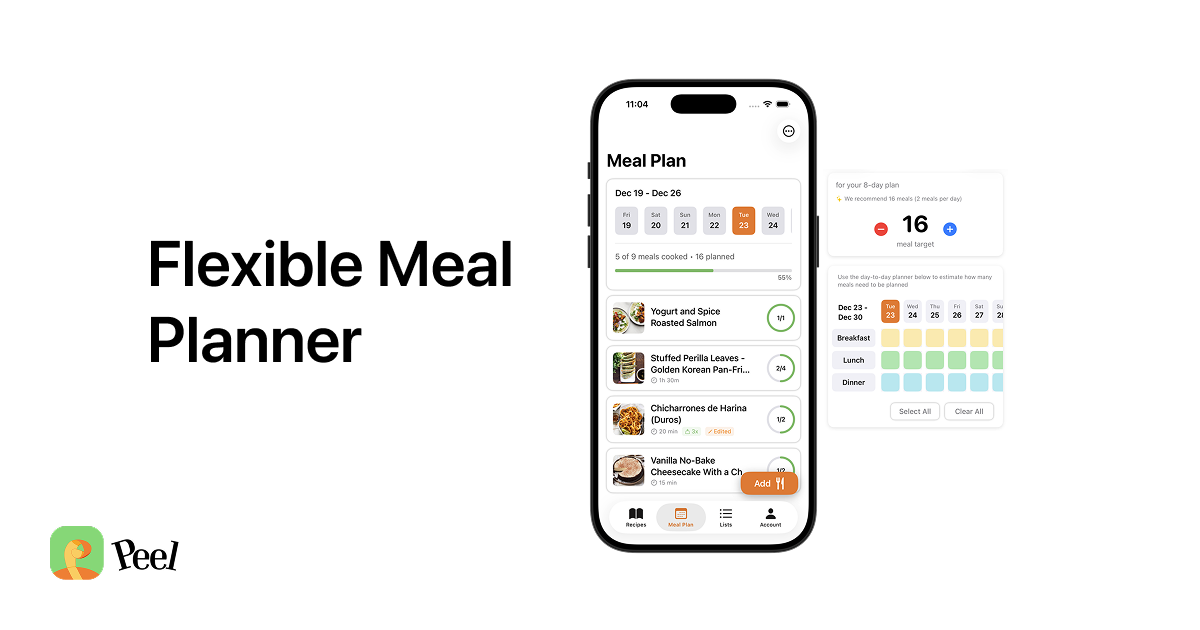
Instead of planning what you'll eat each night, try this: collect a handful of recipes for the week and pick from them each evening based on how you feel.
This is what's called a meal pool. Think of it like a short playlist instead of a rigid schedule.
Here's how it works:
1. Collect 4-6 recipes on the weekend. Don't assign them to days. Just pick meals that sound good right now. Pull from your saved TikTok videos, that Instagram reel you bookmarked, or a recipe you've been meaning to try.
2. Buy groceries for all of them. One shopping trip, one list. You'll have everything you need for any of the meals in your pool.
3. Each evening, pick what sounds good. Look at your pool — maybe three options still available — and choose based on your energy and mood. Tired? Grab the 20-minute pasta. Feeling ambitious? Go for the from-scratch curry.
4. Anything you don't cook rolls to next week. No waste, no guilt. The ingredients are there whenever you're ready.
The reason this works is that you're not eliminating decisions — you're shrinking them. Instead of choosing from the entire universe of possible dinners, you're choosing from four or five meals you already know you want to make. That's the difference between standing in front of an open fridge and picking from a short menu.
Building your recipe collection
Most people who struggle with "what's for dinner" actually have plenty of recipes they want to cook. The problem is that those recipes are scattered everywhere:
- Screenshots buried in your camera roll
- TikTok videos saved in a folder you forgot existed
- Instagram posts you liked months ago
- Bookmarks you never revisit
- Recipes texted from friends that disappeared in the thread
The first step to ending decision fatigue is getting those recipes into one place where you can actually browse them when planning your week.
If you've been saving recipes from TikTok or Instagram Reels, you already have the raw material. You just need a system to organize them and pull from them weekly.
Peel is built around this exact workflow. Save a recipe from TikTok, Instagram, YouTube, or any website — Peel extracts the ingredients and steps automatically. Then drag recipes into your weekly meal pool and let a grocery list generate itself.
How many meals should you plan?
Don't plan seven dinners. That's the fastest way to burn out.
Plan three or four. Leave room for leftovers, a night out, and at least one "fridge surprise" meal where you improvise with what's on hand. The flexible meal planning method works specifically because it doesn't pretend you'll cook every single night.
If you're coming from a world of takeout and delivery — maybe you just transitioned from a meal service like Factor — starting with three home-cooked dinners per week is a realistic, sustainable entry point.
Couples and the "what do you want?" spiral
If you cook for a partner, you know this conversation:
"What do you want for dinner?"
"I don't know, what do you want?"
"I don't care, anything."
"Okay, how about tacos?"
"Hmm, not tacos."
This is decision fatigue multiplied. Now two people are failing to decide instead of one.
A shared meal pool fixes this. Both partners contribute recipes during the week — one person saves a reel, the other bookmarks a recipe from a blog. By Sunday, you've got a pool built by both of you. The question shifts from "what do you want?" to "which of these do we feel like tonight?"
If you're planning meals as a couple, we wrote a whole piece on how to actually agree on dinner that digs deeper into this.
Quick-start: your first meal pool in 15 minutes
Here's how to start this week:
1. Spend 10 minutes gathering recipes. Open your TikTok saves, your Instagram bookmarks, your screenshots. Pick 4-5 meals that sound good. Save them somewhere you can find them easily.
2. Make one grocery list. Look at the ingredients across all 4-5 meals. Write them down. That's your shopping list for the week.
3. Each night, pick from the pool. No decisions about what to cook from scratch. Just pick from your short list.
4. Next Sunday, repeat. Swap out what you didn't make, add new recipes that caught your eye during the week.
After two or three weeks of this, you'll have a growing collection of go-to meals and the nightly "what's for dinner?" question will answer itself.
The goal isn't to be a perfect meal planner
The goal is to remove the one thing that stops you from cooking: the decision. Once you have a system that narrows your choices down to a handful of meals you already want to make, cooking becomes the easy part.
You don't need to be organized. You don't need to batch cook on Sundays. You don't need a color-coded spreadsheet. You need a small pool of meals you're excited about and the ingredients to make them.
Decision fatigue is real, but it's solvable. And the solution isn't more willpower — it's fewer decisions.
Download Peel free and start building your meal pool. Save recipes from TikTok, Instagram, YouTube, or any website, then plan your week in minutes. The free plan includes 5 social media imports — enough to build your first meal pool tonight.
Last updated: March 2026