You know the conversation. It happens around 5 PM, sometimes over text, sometimes while staring into an open fridge.
"What do you want for dinner?"
"I don't know. What do you want?"
"I asked you first."
This goes on until someone gives up and orders Thai food. Again.
If meal planning for couples feels harder than it should be, you're not imagining it. Planning meals for one person is already a chore. Adding a second person with different tastes, different schedules, and a different idea of what counts as "a real dinner" makes the whole thing exponentially more complicated.
Before choosing a shared system, use our meal planning app guide to compare how the main options handle recipes, planning, and grocery lists.
But the problem usually isn't that you disagree about food. It's that you're negotiating from nothing every single week.
Why couples' meal planning keeps falling apart
Most couples who try meal planning hit the same walls. The specific food preferences vary, but the structural problems are almost always identical.
You don't have a shared recipe source
One of you saves TikToks. The other bookmarks Instagram Reels. Maybe someone has a Pinterest board from 2019 that hasn't been touched since. Your grandmother's lasagna recipe lives in a text thread you'd need 20 minutes of scrolling to find.
When it's time to plan the week, you're both pulling from completely different (and equally disorganized) collections. There's no shared reference point, so the planning conversation starts from zero every time.
Rigid plans fall apart when real life shows up
Traditional meal planning assigns specific meals to specific days. Monday is chicken, Tuesday is tacos, Wednesday is that stir-fry thing.
Then Wednesday happens. One of you works late. The other gets invited to happy hour. Neither of you wants stir-fry anymore because you had Asian takeout for lunch.
Rigid plans punish you for living a normal life. For couples, this is worse because two people's schedules have to align perfectly for the plan to work. They rarely do.
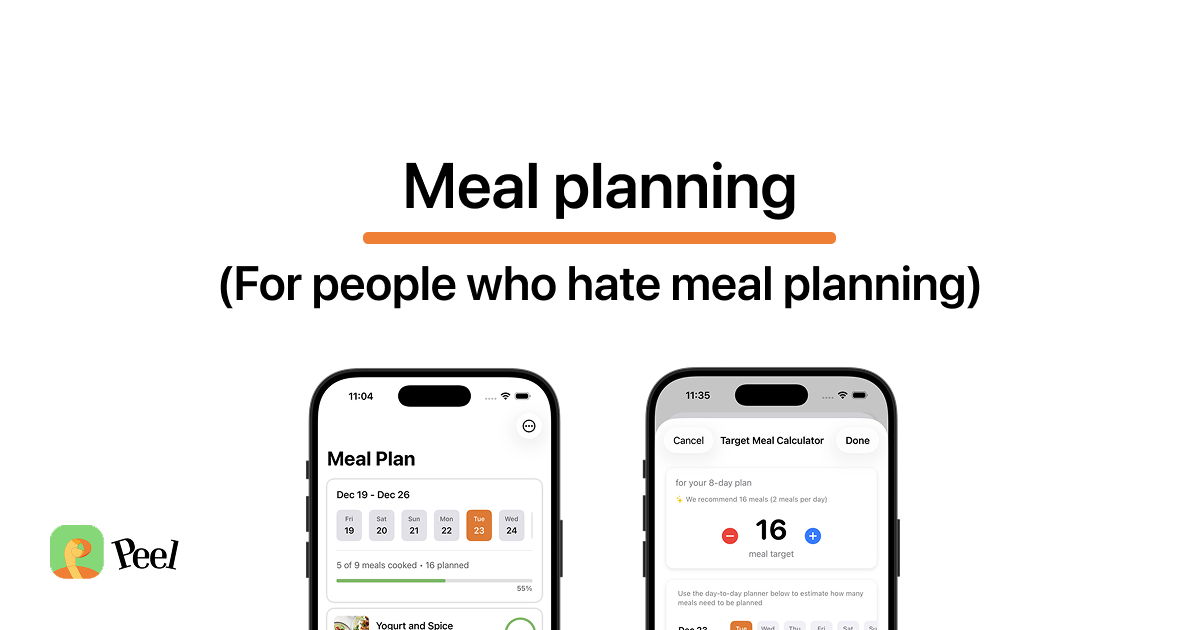
I built Peel around a meal pool because I kept watching perfectly good calendar plans turn into a feeling of failure whenever real life changed.
One person ends up doing all the work
In a lot of households, "we should meal plan together" really means one person picks the recipes, writes the grocery list, and does the shopping while the other person says "that sounds fine" to everything. That's not collaboration. It's delegation wearing a disguise.
The planner gets resentful. The other person feels like they can't contribute because the system belongs to someone else. The whole thing collapses within a few weeks.
The fix: build the pool first, plan second
Here's what actually works for couples, and it's simpler than whatever complicated spreadsheet or shared Google Doc you've been trying. If you're wondering how much of the process software should decide for you, our honest take on AI meal planning apps starts with the same principle: the tool should reduce friction without taking away your choices.
Instead of planning individual meals for individual days, both of you build a shared collection of recipes you both like. Think of it as a meal pool: a running list of dinner options that are pre-approved by both partners.
Then when it's time to plan the week, you're not brainstorming. You're just picking from a list of things you already know you both want to eat.
That's a fundamentally different conversation than "what do you want for dinner?"
How to build your couples' meal pool
This part takes maybe 30 minutes total, spread across a week or two. Don't try to do it all at once on a Sunday afternoon. That turns into a project, and projects feel like work.
Step 1: Each of you adds your favorites separately. Go through your saved recipes (TikTok, Instagram, YouTube, wherever) and add the ones you'd genuinely be happy eating. Don't filter yet. Don't worry about whether your partner likes them. Just get everything into one place.
Step 2: Find the overlap. Go through each other's additions. Mark the ones you're both excited about. These are your "easy yes" meals. Most couples find they agree on more than they expected.
Step 3: Try the maybes. The recipes that one person loves and the other hasn't tried? Those go into a rotation of "new this week." Cook one unfamiliar recipe per week alongside the safe favorites. Some will land, some won't. The ones that work get added to the shared pool permanently.
Step 4: Let the pool grow over time. After a month, you'll have 15 to 20 meals you both like. After three months, 30 or more. At that point, planning gets nearly automatic. You've already done the hard part.
Handling different tastes (without cooking two separate dinners)
The biggest worry couples have about meal planning together is the preference gap. One person is vegetarian, the other wants meat at every meal. Someone's doing low-carb while their partner lives on pasta.
Here's the thing: you don't need to eat the same exact plate at every meal. You need a base you both enjoy with room for individual tweaks.
A grain bowl works for almost every dietary combination. Same with tacos, stir-fry over rice, and big salads. The base is shared, and each person customizes their portion. That's one meal to cook, two people fed, no arguments.
If your preferences are genuinely incompatible on certain nights, the meal pool handles that too. Just include a few meals each partner can make independently. Tuesday is "everyone fends for themselves" night. No guilt, no wasted ingredients, and neither person feels like they're constantly compromising.
The 10-minute planning session
Once you have a shared pool, the weekly planning conversation shrinks dramatically. Here's what it looks like:
Sit down together (or do it over text while one of you is commuting). Pull up the meal pool. Pick 4 to 5 dinners for the week. Don't assign them to specific days. Just agree on which ones you want available.
That's it. No browsing recipes from scratch. No "I don't know, what sounds good to you?" loop. You're choosing from pre-approved options.
The whole process takes about 10 minutes. Most of it is spent deciding which of your favorites you're in the mood for this week, which is a much better conversation than starting from nothing.
What about different schedules?
This is where flexible planning really shines for couples. Because you're not assigning meals to specific days, nobody has to cook the Tuesday meal on Tuesday.
If one person gets home early, they can pick whichever pool meal sounds good and start cooking. If plans change and you end up eating out Wednesday, no food is wasted and no plan is "ruined." The meals in your pool are just options, not obligations.
For couples where one person travels for work or has unpredictable hours, this matters even more. The person at home picks from the pool based on what works that night. When both people are around, you pick together. The system flexes without breaking.
If you're looking for more on planning around unpredictable schedules, we wrote a whole guide on meal planning for one that covers the solo nights.
Tools that make this easier
You can build a shared meal pool with a notes app or a shared Google Doc. It works, but it's clunky. You end up copy-pasting recipe links, manually writing grocery lists, and losing track of what you've tried, which is why shared planning features matter when you compare the best free meal planning apps.
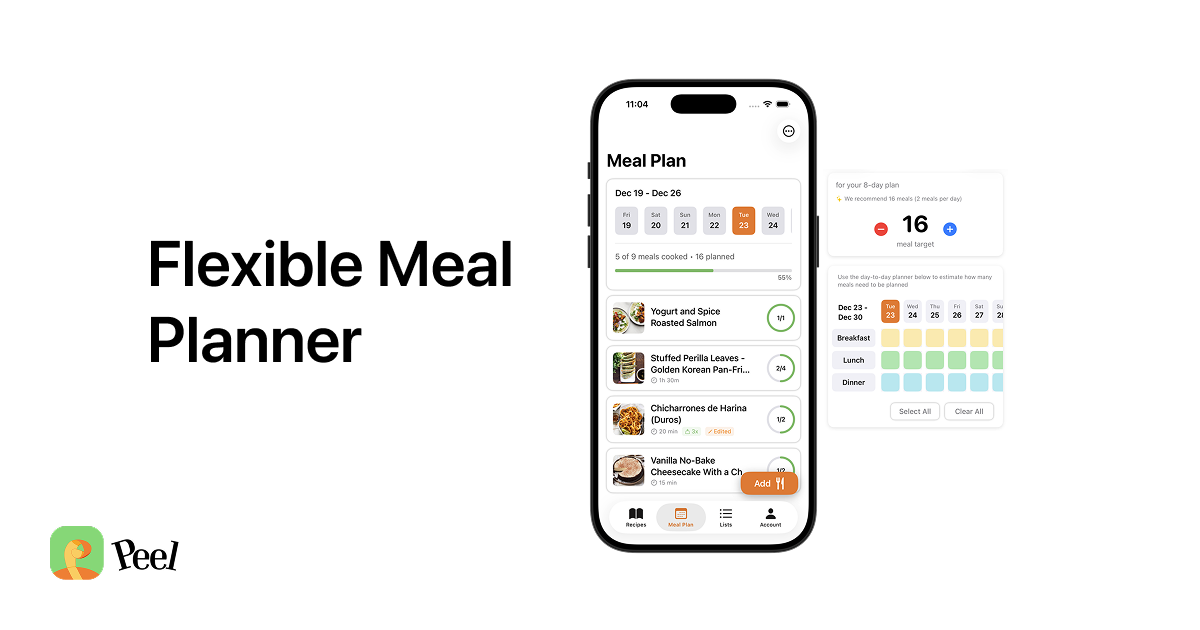
Peel was built around the meal pool concept. Both partners save recipes from wherever they find them (TikTok, Instagram, YouTube, websites) and they all end up in one shared collection. When you pick meals for the week, the app generates a combined grocery list automatically. No duplicate lists, no "did you already buy onions?" texts from the store.
Peel is free to start, with Premium at $2.99/month or $29.99/year if you want unlimited social media imports and shared kitchen features. It's iOS only for now, with Android on the way.
Start with what you already save
You and your partner are probably already finding recipes you want to cook. They're just scattered across different apps, screenshots, and bookmarks on two separate phones.
The dinner negotiation problem isn't about food preferences. It's about not having a shared system. Build the pool together, and the nightly "what do you want?" conversation turns into "which of our favorites sounds good tonight?"
That's a question with actual answers.
Last updated: September 2026