Let's get something out of the way: eating out isn't a problem you need to fix.
Maybe you eat out because you genuinely enjoy restaurants. Maybe your social life revolves around dinner plans. Maybe you're tired after work and the Thai place downstairs is right there. All of those are fine reasons.
The problem shows up at home, in the fridge, on Sunday night. You bought groceries for seven dinners. You cooked two. The spinach turned to slime. The chicken sat in the fridge for four days before you threw it away.
According to the USDA, the average American family of four wastes about $1,500 worth of food per year. A lot of that waste comes from buying groceries with good intentions and never getting around to cooking them.
If you eat out three or four nights a week, a seven-day meal plan is setting you up to fail. You don't need a meal plan that covers every meal. You need one that covers the meals you'll actually cook.
If you want software built around that flexibility, compare the options in our guide to the best meal planning apps.
Stop planning for seven dinners
This is where most meal planning advice goes wrong for people who eat out regularly. The standard approach assumes you'll cook every night, or close to it. So you pick seven recipes, buy groceries for all of them, and then life happens.
You meet a friend for dinner on Tuesday. Wednesday you're too tired and order delivery. Thursday your partner suggests trying the new ramen spot. By Friday, half your groceries are untouched and you feel like you failed at meal planning. Again.
The fix is simple: plan for the meals you'll realistically cook.
If you eat out three to four times a week, plan three to four home dinners. That's it. Buy groceries for those meals only. The math changes completely when you stop overbuying. Less waste, less guilt, less money in the trash.
Build a meal pool, not a calendar
Instead of assigning recipes to specific days, try the meal pool approach. You pick three or four recipes for the week and add them to a pool. Each night, you cook whatever sounds good from that pool.
This works well when you eat out a lot because you don't need to predict which nights you'll be home. Tuesday turns into a dinner-out night? Fine. You still have three recipes in your pool, and you'll get to them when you get to them.
It also solves the "nothing at home sounds good" problem. When you sit down at a restaurant, you scan a menu of options and pick what appeals to you in that moment. A meal pool works the same way, just with recipes you chose at the start of the week.
Make your home meals worth staying in for
Here's the part nobody talks about: most people who eat out frequently do it because restaurant food is just... better. More interesting. More flavorful. More varied than the same rotation of chicken and rice they make at home.
The answer isn't to force yourself to eat boring home meals. It's to raise the quality of what you cook.
If you scroll TikTok or Instagram, you've probably saved dozens of recipes that looked amazing. That birria taco recipe. The garlic butter salmon. The homemade ramen that looked almost as good as the restaurant version. Those saved recipes are sitting in your bookmarks doing nothing.
They could be your meal pool.
The gap between "that looks good" and "I actually made it" is mostly organizational. You need the recipe pulled out of a video and into a format you can follow. You need the ingredients on a grocery list. You need a system that reminds you those recipes exist when it's time to plan the week.
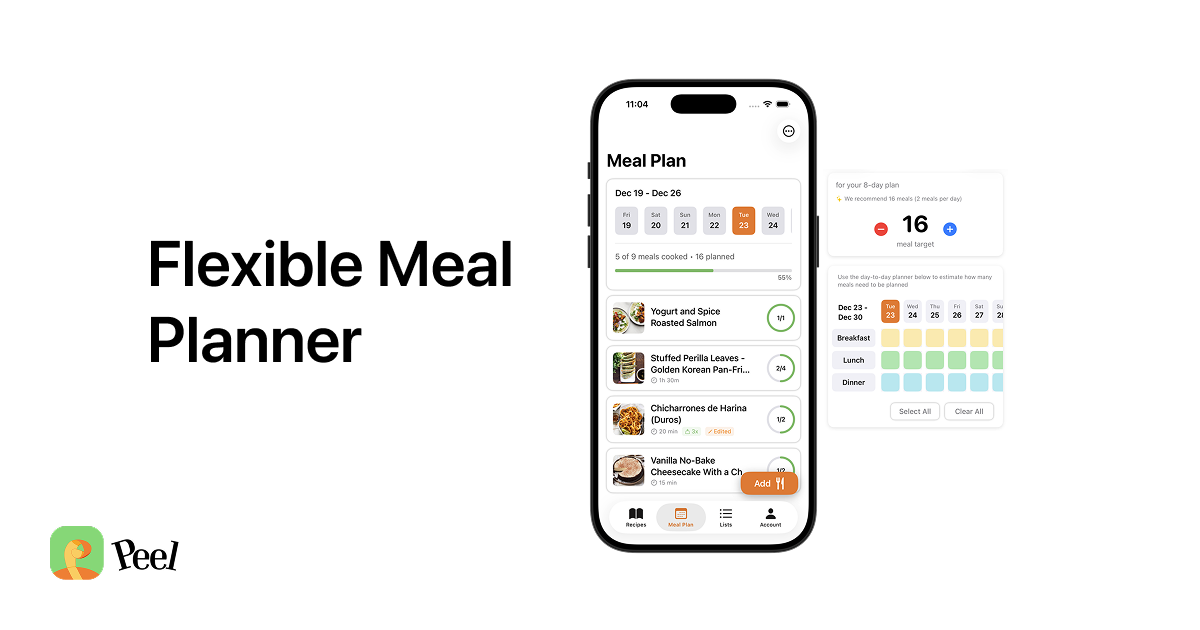
That's what apps like Peel are built for. You save a recipe from TikTok or Instagram, and it extracts the ingredients and steps so you can actually cook it. Those saved recipes become your meal pool, and the grocery list builds itself from whatever you pick for the week.
Stock a "never spoils" grocery core
When you eat out unpredictably, fresh ingredients are a gamble. You buy avocados on Sunday and eat out Monday through Wednesday, and by Thursday they're brown mush.
Keep a small grocery core of shelf-stable and freezer-friendly items that work as building blocks for quick meals:
Pantry: pasta, rice, canned beans, canned tomatoes, coconut milk, soy sauce, olive oil, garlic, onions
Freezer: chicken thighs, ground beef or turkey, frozen shrimp, frozen vegetables, tortillas
Fridge (long shelf life): eggs, butter, hard cheeses, condiments
These ingredients won't go bad if you don't get to them this week. They also pair well with spontaneous cooking. Got home late but don't want to order out? Garlic butter pasta with whatever's in the fridge takes 15 minutes.
The fresh stuff (salad greens, fresh herbs, proteins you plan to use within two days) should only go on the list when you know which nights you'll be home.
The "two anchor meals" system
If planning three to four meals still feels like too much, try this: pick two anchor meals per week. That's it. Two recipes you're going to make no matter what.
The rest of the week? Eat out, order in, make something simple from your pantry core, or eat leftovers from one of your anchors.
Two good home-cooked meals per week adds up to over a hundred per year. That's not nothing. And because you're only buying groceries for two meals, your food waste drops to almost zero.
Pick recipes that make good leftovers. A big pot of chili, a sheet-pan dinner with extra portions, a stir-fry that reheats well. Cook once, eat twice.
Stop feeling guilty about it
The meal planning world has a weird morality problem. There's this unspoken assumption that cooking every meal at home is the goal, and anything less is a failure. That's not true.
For a lot of people, a realistic and sustainable approach means cooking a few great meals at home and enjoying restaurants the rest of the time. That's a perfectly reasonable way to eat.
The point of meal planning isn't to eliminate eating out. It's to make your home cooking intentional instead of reactive. When you do cook, you want to cook something you're excited about, with ingredients you bought on purpose, from a recipe you actually like.
Why rigid meal plans fail isn't because people lack discipline. It's because rigid plans don't match how people actually live. If you eat out a lot, the best meal plan is one that accounts for that from the start.
Getting started this week
Here's a low-pressure way to try this:
- Look at your week. How many nights will you realistically cook? Be honest.
- Pick that many recipes. Not more. Pull from your saved TikTok recipes, Instagram bookmarks, or wherever you collect ideas.
- Buy groceries for those recipes only. Skip the optimistic extras.
- Cook whichever recipe sounds good on a night you're home. Don't assign days.
- If you cook everything, great. If one meal rolls to next week, also great. No wasted food either way.
If you want a free tool to organize this, Peel lets you save recipes from TikTok, Instagram, YouTube, and websites, then add them to a weekly meal pool with an auto-generated grocery list. The free tier covers the basics.
The best meal plan for someone who eats out a lot is a small one. Plan less, cook better, waste nothing.
Last updated: March 2026