Most meal planning apps in 2026 lead with the same pitch: let AI handle dinner for you. And for some people, that's exactly the right answer. But for a lot of others, it's solving a problem they don't actually have.
This isn't a takedown of AI meal planning. Some of these apps are genuinely good. The issue is that "AI meal planning app" has become a catch-all category that lumps together people with very different problems. Figuring out which problem you actually have saves you from paying for the wrong tool.
Two completely different dinner problems
Here's the split that nobody in this space talks about:
The blank-page cook. You open the fridge at 5pm and have zero ideas. You don't follow food creators, you don't have a running list of things you want to try. You just need someone to tell you what to make tonight. If this is you, an AI meal planner makes total sense. Apps like Ollie, Eat This Much, and What's For Dinner generate weekly meal plans based on your dietary preferences and calorie goals. You pick your constraints, the AI fills in the meals.
The recipe collector. You have 200 saved TikToks, a folder of Instagram bookmarks, and a notes app full of links. Your problem isn't "I don't know what to cook." Your problem is that the recipes you actually want to make are scattered across five apps and you never get around to planning them into a real week. Adding more AI-generated recipe suggestions to this pile doesn't help. It makes the pile bigger.
Most "best AI meal planning app" articles treat these as the same person. They're not.
When AI meal planning is worth it
If you're the blank-page cook, AI meal planners can be genuinely useful. The better ones in this space right now:
Ollie generates personalized weekly plans with grocery lists. It leans toward families and can account for dietary restrictions. The AI picks meals from a curated database, and you can swap out dishes you don't like.
Eat This Much has been around longer than most. It generates meal plans based on calorie targets, macros, and diet type. More numbers-driven than the others.
What's For Dinner takes a different approach entirely. It's a Claude AI-powered service that emails you a weekly plan with a grocery list. No app to download.
PlanEat AI publishes guides on using ChatGPT, Gemini, and Grok for meal planning. If you want to DIY your AI meal planning with free tools, their blog is a decent starting point.
These all solve the same core problem: "I have no idea what to cook, please give me a plan." If that's your situation, any of them will get you further than staring at your fridge.
When AI meal planning isn't your problem
If you already follow food creators, save recipes regularly, and know what you like to cook, the "AI generates your meals" model is a mismatch. Here's why:
You already have the recipes. The hard part of cooking isn't finding new ideas. You've done that. Your TikTok saves are full of meals you genuinely want to try. An AI that generates its own suggestions ignores the collection you've already built.
AI-generated meals get repetitive. Curated recipe databases are finite. After a few months, the same chicken stir-fry variations start cycling back. You can't ask an AI planner to make the @halfbakedharvest pasta you bookmarked last Tuesday because it doesn't know about your bookmarks.
The real friction is organizational, not inspirational. You don't need more recipes. You need a way to get the recipes you already found into a format you can actually cook from, with a grocery list attached.
What the retention data actually says
RevenueCat's 2026 State of Subscription Apps Report looked at over a billion in-app transactions across iOS, Android, and web. The finding that caught my attention: AI-powered apps retain only 21.1% of annual subscribers after 12 months. Non-AI apps retain 30.7%.
Put differently, people using AI apps cancel their annual subscriptions 30% faster than people using non-AI apps.
This doesn't mean AI apps are bad. It means there's a gap between what gets people to sign up (the promise of automated meal planning) and what keeps them cooking week after week. The initial demo is exciting. Three months in, you're ignoring the AI-generated plan and ordering takeout anyway.
The same report found that lower-priced apps retain subscribers better than expensive ones. Apps under $30/year kept 36% of subscribers compared to 23% for high-priced apps. The pricing model matters almost as much as the features.
The recipe fatigue problem
This is the thing AI meal planning apps don't talk about. When the AI picks your meals from a database, you're eating what the algorithm thinks you should eat, not what you actually want to eat. That works fine in week one. By month four, you've seen every variation of "healthy chicken bowl" the system can produce.
The meal plans start feeling like homework. You stop opening the app. You cancel.
Compare that to planning from your own collection. If you spent the last month saving recipes that caught your eye on TikTok and Instagram, those are meals you chose because they looked good to you. Planning from that collection feels different from following an algorithm's schedule. It's the difference between picking a movie yourself and letting autoplay decide.
Planning with recipes you already love
If you're the recipe collector type, what you actually need isn't AI-generated meals. You need three things: a way to get recipes out of screenshots and social media saves into one searchable place, a way to loosely plan which ones you'll make this week, and a grocery list that builds itself from whatever you picked.
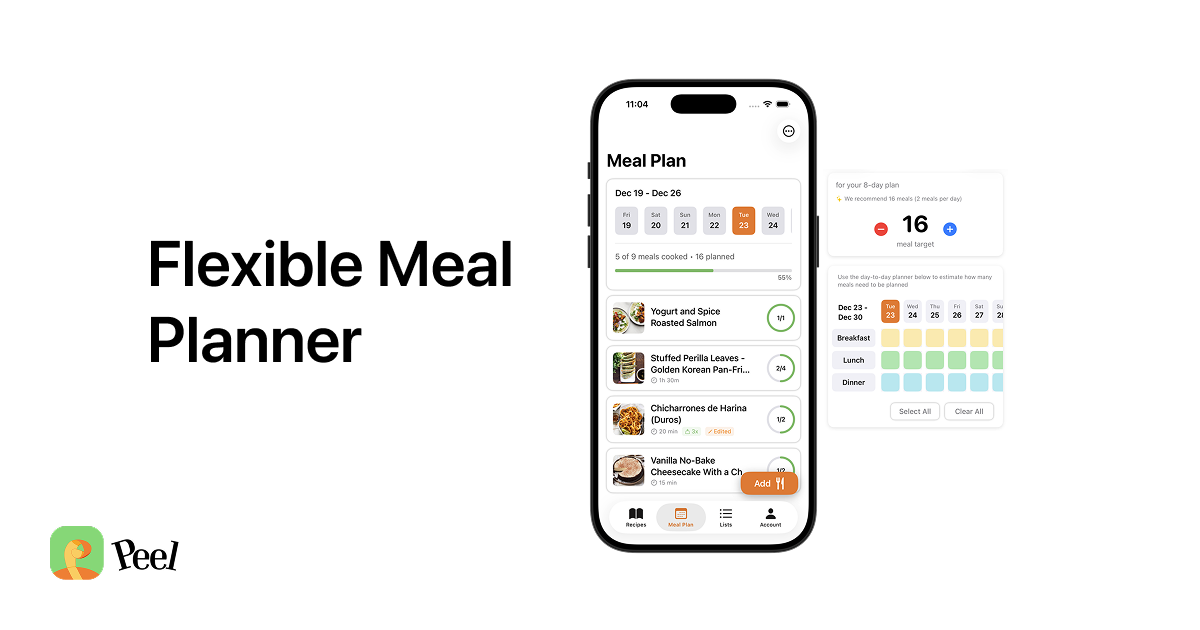
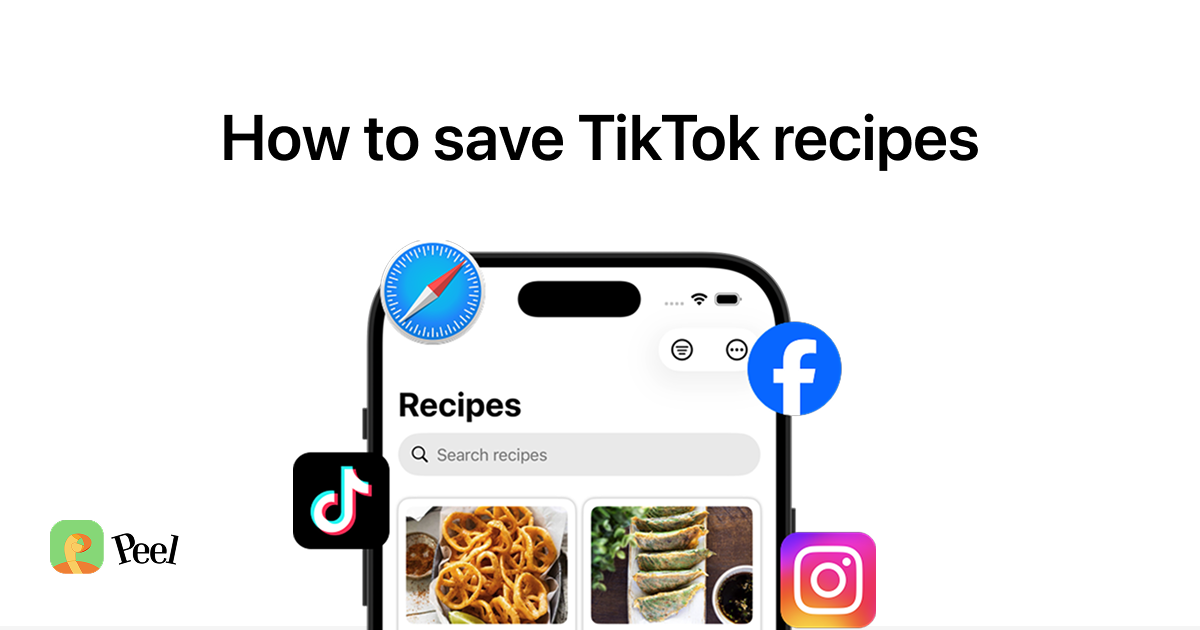
That's what Peel does. You share a TikTok, Instagram Reel, YouTube video, or website link to Peel, and it extracts the full recipe with ingredients and steps. You toss recipes into a weekly meal pool and cook whatever sounds good each night. The grocery list generates from the pool.
No AI decides your meals. You already made those decisions when you saved the recipes. Peel just closes the gap between "that looks amazing" and "we're having it Wednesday."
It's free to start, with Premium at $2.99/month or $29.99/year if you want unlimited social media imports and shared kitchens for couples.
Which tool for which person
Here's the honest breakdown:
You want AI to generate your meals: Look at Ollie, Eat This Much, or What's For Dinner. They're built for people who want to outsource the "what's for dinner" decision entirely. Most run $5-15/month.
You want to use ChatGPT or Gemini directly: Free, and surprisingly capable for one-off meal ideas. Falls apart when you need to save recipes, build grocery lists, or plan across a whole week. PlanEat AI has some good prompt guides if you want to try this route.
You have recipes saved everywhere and need a system: That's Peel's territory. Import from TikTok, Instagram, YouTube, and websites. Plan flexibly. Shop from one list. Free tier available, $29.99/year for everything.
You want calorie and macro tracking with meal plans: MyFitnessPal's Premium+ ($99.99/year) now includes a meal planner. It's calorie-driven and pulls from their recipe database, not your saved recipes. Good if you're already tracking macros.
The right answer depends on your actual problem, not on which app has the best marketing. Figure out which dinner problem is yours, and the tool choice gets obvious.
Last updated: March 2026