The average college student spends around $672 per month on food, according to the Education Data Initiative. About $263 goes to groceries. The rest ($410) goes to eating out. Across four years, that's more than some people spend on tuition at community colleges.
The spending isn't really the problem. The problem is that you're not eating out because you love it. You're eating out because at 9pm after class, an exam, and two hours of studying, figuring out what to cook feels like the hardest thing you could possibly do. So you open DoorDash.
Meal planning for college students doesn't need to look like the Pinterest version, no matching glass containers, no color-coded spreadsheet, no rigid calendar that locks you into stir-fry every Tuesday whether you want it or not. What you actually need is a low-effort system that prevents the 9pm "I have nothing to eat" situation.
Our guide to the best meal planning apps can help you choose that system before you commit time or money to one.
Here's that system.
Why rigid meal plans fail in college
Most meal planning advice assumes things college life doesn't actually offer.
A predictable schedule, for one. Class times change each semester. Finals weeks are chaotic. Some weeks you're on campus from 8am to 9pm; other weeks you have long stretches at home. A rigid plan that has Monday as pasta night falls apart the moment Monday becomes a 13-hour campus day.
A real kitchen, for another. If you're in a dorm, you might have a microwave, a mini-fridge, and access to a shared floor kitchen you'd rather not fight over. In an apartment, you've probably got a small stove, one decent pan, and a roommate who eats your leftovers.
And mental energy for decisions. College is exhausting in a specific way. By the time you've made a hundred small decisions (what to work on, who to study with, which reading to actually do) choosing what to cook for dinner feels like one decision too many. This is decision fatigue, and it's why you end up spending $18 on mediocre pad thai instead of cooking the chicken in your fridge. Some students try asking ChatGPT or Gemini to plan their meals, which helps generate ideas but does nothing with the recipes already saved on your phone.
The system that actually works is flexible, low-commitment, and forgiving of the weeks when life gets chaotic.
The pool approach: a better way to plan
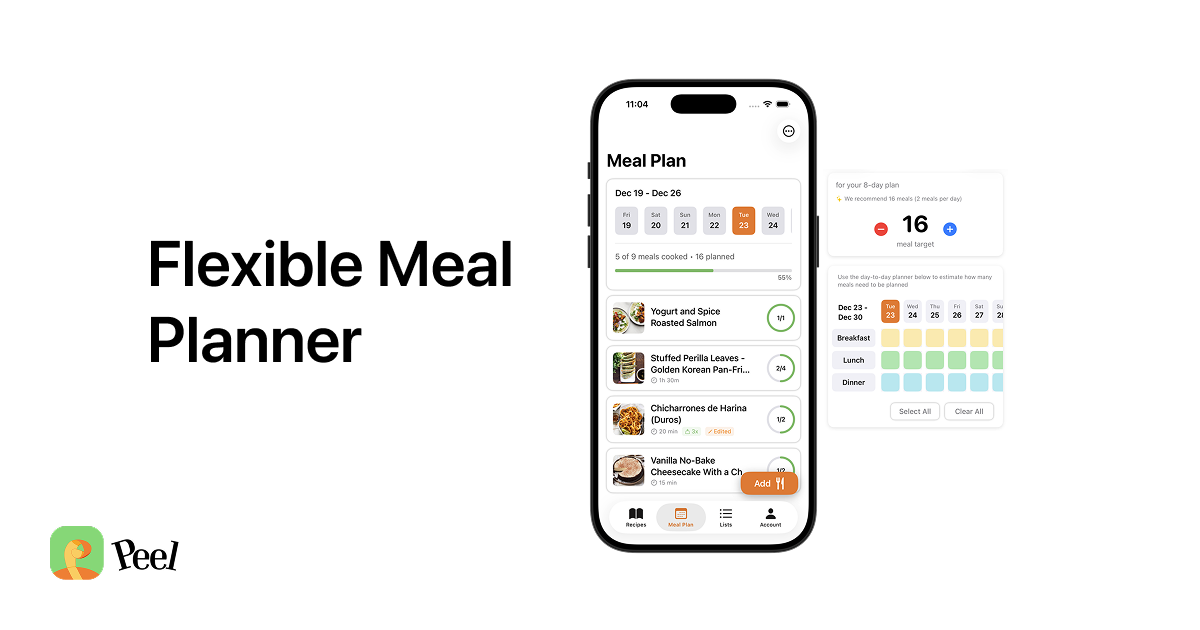
I built Peel around a pool instead of a calendar for exactly this reason. Back when I planned Monday through Sunday, a random Thursday event would blow up the whole week, and a broken plan always felt like a personal failure rather than a normal week getting in the way.
Instead of assigning specific meals to specific days, build a pool of 4-6 meals you're willing to eat this week.
It works like this:
- Pick 4-6 recipes you actually want to make. Not ambitious new dishes. Things you've made before, or cooking videos you saved on TikTok and think you could actually pull off.
- Make one grocery run for everything across all of them.
- Each night, look at your pool and pick whatever sounds good, and whatever you have energy for.
No calendar. No commitment that Tuesday is taco night. You're giving yourself options so you're not making a hard decision when you're already depleted.
This works especially well for college because your schedule doesn't repeat cleanly week to week. A Wednesday dinner might get pushed to Thursday because your study session ran until 10pm. The pool doesn't care. The meal is still there when you're ready.
If you've tried rigid meal planning before and quit after one bad week, this approach is worth trying. The flexible meal pool method is designed for exactly the kind of schedule college creates, the kind where Tuesday looks nothing like the previous Tuesday.
The recipe chaos problem
Most college students already have more recipes than they think. They're just scattered across four different places and impossible to use when it counts.
You've got TikTok saves you bookmarked six months ago. Instagram Reels you liked because the pasta looked incredible. Screenshots in your camera roll showing half an ingredient list because you caught the video mid-scroll. A browser tab you "kept open" that you're never going back to.
According to a 2025 report from Rough Draft Atlanta, college students regularly use TikTok to find dorm-friendly recipes. The gap isn't finding recipes, it's turning those videos into something you can actually use while standing in a grocery store at 7pm or cooking at 9pm.
This is where most college meal planning attempts fall apart. Not for lack of trying. The recipes are there; they're just stored in formats that stop being useful the moment you try to actually cook from them.
Building a recipe collection that works
You're already saving recipes. The problem is the format.
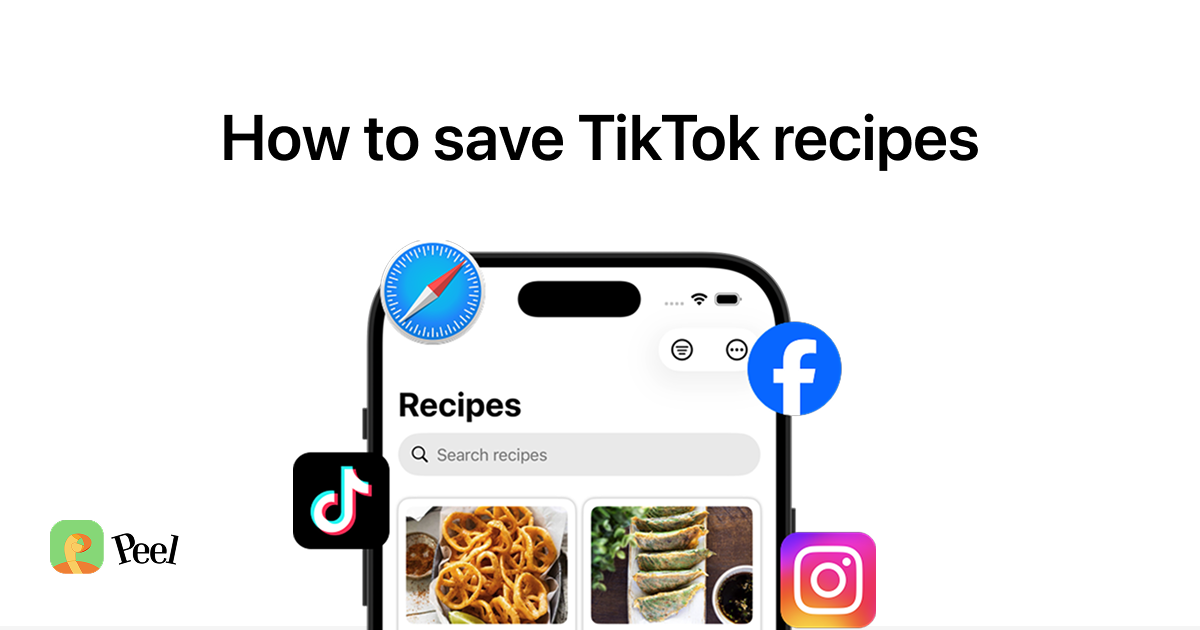
If you save TikTok recipe videos to Peel instead of your bookmark folder, the app pulls out the full ingredient list and step-by-step instructions automatically. No scrubbing through a 60-second video. No hand-transcribing measurements. No screenshot that catches the creator's face instead of the ingredient list.
The same thing works with Instagram Reels, YouTube cooking videos, and regular recipe websites. You end up with a searchable library of recipes you've actually picked, not algorithmic suggestions, not someone else's curated database. The recipes you already want to cook.
When Sunday comes around and you're picking your pool for the week, you're not staring at a blank page. You're scrolling through things you've already flagged and said "I want to make this someday." Someday just became this week.
Read the full guide on how to save TikTok recipes if you want the step-by-step process for turning any cooking video into a usable recipe with ingredients and steps.
Budget basics: ingredient overlap is everything
Eating out is expensive. But grocery shopping without a plan can be too, you end up buying things that don't go together, using half of each item, and throwing the rest away.
The key is planning your pool so multiple recipes share core ingredients. If two of your five meals use chicken, you buy one larger pack and split it. If three of them use garlic, olive oil, and onion, those basics stretch your whole week without much extra cost. If you'd rather not track that overlap by hand, the best free meal planning apps build one combined grocery list from your whole pool automatically, no cost required.
Ingredients that go far in a college kitchen:
- Eggs, cheap, fast, and work for breakfast, lunch, or dinner
- Rice, buy it in bulk, it lasts months, pairs with basically anything
- Dried pasta, same logic as rice, and it cooks in 10 minutes
- Canned beans, no refrigeration needed before you open them, add protein to almost any meal
- Frozen vegetables, don't go bad, cook in five minutes, usually cheaper than fresh
- Rotisserie chicken, pre-cooked, goes into salads, tacos, soups, or grain bowls without any real cooking on your part
The TikTok recipes that actually work for college are the short ones built around pantry staples. The 15-minute garlic pasta. The five-ingredient grain bowl. The stir-fry that uses whatever's left in the fridge. If you've been saving those kinds of videos, you're already building the right collection.
Making it work in a dorm
Dorm cooking has hard constraints: limited equipment, shared kitchen access you have to plan around, and usually a dining hall meal plan that covers part of your eating anyway.
If you have a meal plan, you don't need to cook every meal. You just need to cover the gaps, the late nights when the dining hall is closed, the weekends when you're tired of the same five options, the days you'd rather not walk across campus in the cold.
Three or four easy things you can make in a dorm room go a long way. A rice cooker is worth the counter space: it can steam vegetables and cook proteins on top of the rice at the same time, which makes actual dinners possible without a stove. A microwave scrambled egg (cooked in a mug, ready in 90 seconds) is genuinely useful before an early class. Overnight oats take no morning effort at all, you set them up the night before and they're just there.
If you've moved into an apartment with a real kitchen, you have more options. The pool system works the same way, it just lets you cook more interesting things.
The Sunday reset
You don't need to cook every day. Most people don't.
The most sustainable approach is spending 30-60 minutes on Sunday (or whichever day you have breathing room) doing a few things.
Decide what's in your pool for the week. Pick the 4-6 meals, pull the ingredient lists, make your grocery list. Make one grocery run, not multiple mid-week trips. And do any prep that saves you time later: boil a pot of rice, hard-boil some eggs, wash and cut vegetables before they sit too long and you stop feeling like dealing with them.
That prep work is what closes the gap between "I have ingredients" and "I can have dinner in 15 minutes." Without it, even a well-stocked fridge still requires effort you might not have on a Tuesday night.
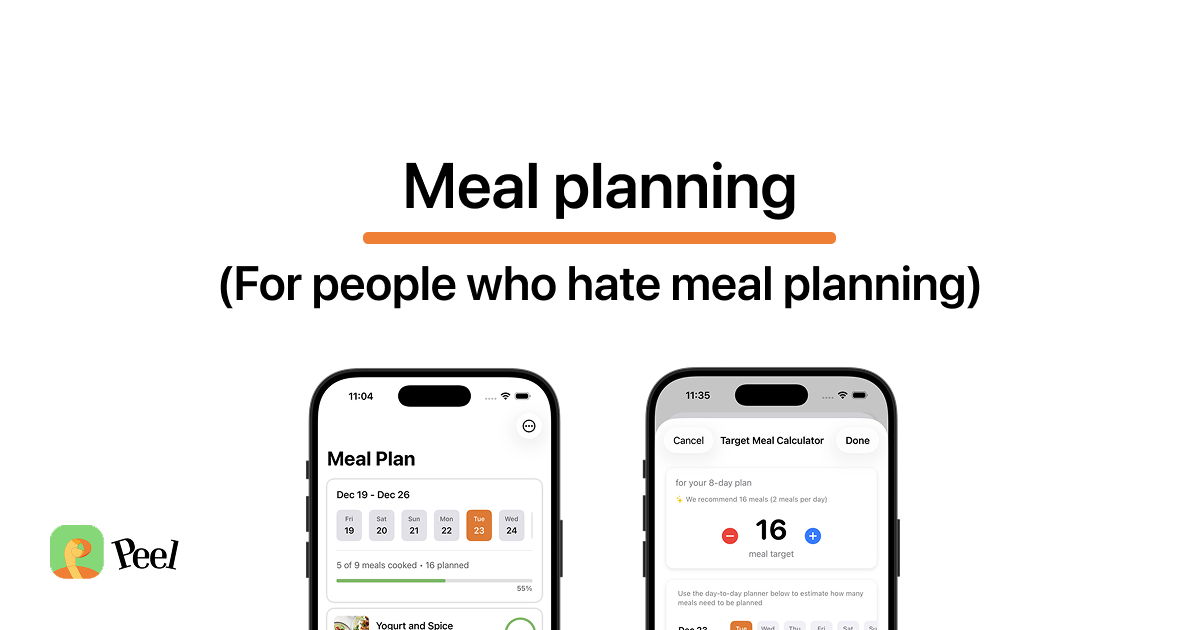
This is the same problem people with all kinds of busy schedules run into. The meal planning approach for people who hate meal planning covers this in more depth, it's worth a read if the whole idea of planning still feels like too much work.
Frequently asked questions
How do I meal plan in college with no cooking experience?
What should a college student cook on a budget?
Is Peel free for college students?
What if I have a really irregular schedule?
Last updated: September 2026