Meal planning with ADHD is hard, but not for the reasons most advice columns assume.
It's not that you don't care about eating well. You probably care a lot. It's that every "just do this on Sunday" system assumes a kind of consistent, linear thinking that doesn't match how an ADHD brain actually works.
You sit down to plan meals. Your brain jumps to whether you have garlic. Then to a recipe you saw on TikTok last Tuesday. Then to the fact that you forgot to take chicken out of the freezer yesterday. Twenty minutes later, nothing is planned and you feel vaguely guilty about it.
This post isn't about fixing your brain. It's about building a system around it.
Why traditional meal planning fails for ADHD
Most meal planning advice is built for a particular kind of person: someone who can assign Monday = chicken tacos, Tuesday = pasta, and then actually cook that exact thing three days later when the plan says to.
For ADHD brains, that approach breaks down at almost every step.
Decision fatigue at planning time. Sitting down to make a week of decisions all at once (while also not quite knowing what you'll want to eat Thursday) is a lot. The task feels overwhelming before you start.
No flexibility for mood and energy. ADHD often comes with big energy swings. The person who felt ambitious on Sunday and planned a homemade curry is not always the same person who opens the fridge Wednesday night exhausted. A rigid plan doesn't account for that.
Forgetting the plan exists. You made a great plan. Then Tuesday came and you ordered pizza and never looked at it again. Out of sight, out of mind, and if the plan lives in a notebook you closed or a spreadsheet you haven't opened, it's effectively gone.
Hyperfocus on the wrong part. Plenty of people with ADHD are great at the exciting part (finding recipes, imagining meals) and worse at the follow-through (shopping, actual cooking on a random Wednesday). A system that requires consistent follow-through at every step will lose you somewhere.
Guilt when it breaks down. Traditional meal planning carries implicit pressure. If you went off-plan, you failed. That guilt makes it harder to try again.
The goal isn't to force a neurotypical system onto yourself harder. It's to find one that already matches the way your brain works.
A different approach: the meal pool
Instead of a calendar, try a pool.
I built Peel around a pool for exactly this reason. I'd plan Monday through Sunday, feel good about it, and then a random Thursday event would blow the whole thing up, and it never felt like just an inconvenience; it felt like I'd let the week down. A pool doesn't do that to you.
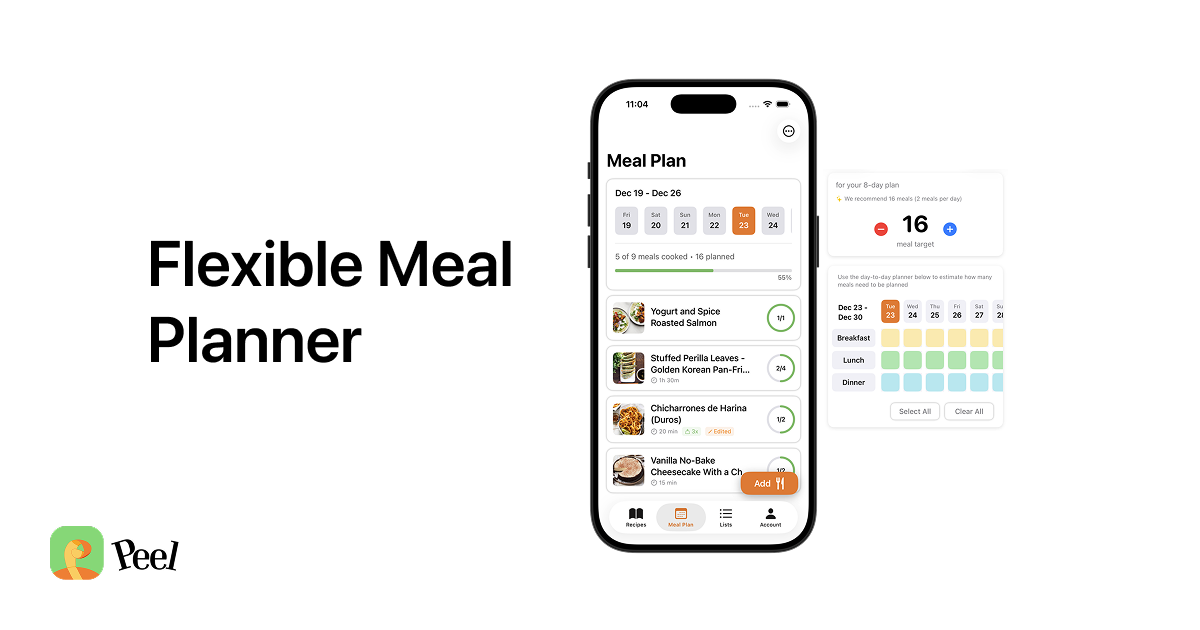
The idea is simple: gather 5-7 recipes you genuinely want to eat this week. Not assigned to specific days, just "these are in play." Each night, you pick from the pool based on how you're feeling and what sounds good. Whatever's left rolls over or gets swapped out next week.
This works well for ADHD for a few reasons:
You only make one big decision at the start. Instead of daily "what are we having tonight?" spiraling, you narrow the options once a week. When it's time to cook, you're choosing from a small list, not the entire universe of food.
It allows for energy and mood variation. Planned a slow-cooked stew but you have zero bandwidth tonight? Grab the pasta from the pool instead. Nothing breaks. You don't have to restart the whole system.
It doesn't punish deviation. Ordered takeout Thursday? Fine. The pool is still there Friday. No catch-up required, no guilt spiral.
The decision is made in advance. This is key for ADHD. When 6pm arrives and your brain is tired and hungry, having to generate options from scratch is brutal. It's also why some people reach for an AI planner to remove the decision entirely, though that has its own tradeoffs worth an honest look. Having a pre-narrowed list of things you already chose and presumably already have groceries for changes the whole calculation.
If you want to read more about how this approach works, this guide to flexible meal planning breaks down the method in detail, and our guide to the best meal planning app covers what to look for in a tool that supports it.
ADHD meal planning tips that actually help
Keep the recipe list shorter than you think you need
The temptation is to plan 10-12 meals because you want options. Resist this. Five to seven is enough. More choices means more friction when you're already depleted. A shorter list also means a simpler grocery trip.
Build a "go-to" shortlist for bad brain days
Everybody with ADHD has days when cooking a real meal isn't happening. That's not a failure, that's just reality. Keep a separate list of 3-4 things you can make in 15 minutes or less with pantry staples: scrambled eggs, pasta with olive oil and garlic, quesadillas, whatever. These are your fallback, not your failure.
Reduce the planning task to the smallest possible step
For a lot of people with ADHD, "plan meals for the week" is too large a task to start. Break it down: all you're doing is picking 5 recipes. That's it. Not assigning days, not writing a grocery list yet, not figuring out when you'll shop. Just pick five things.
Once the five are picked, then the next step: make the grocery list. Then one more step: get the groceries. Small sequential tasks are more ADHD-friendly than one big "meal planning session."
Save recipes the moment you see them
One of the biggest friction points in ADHD meal planning is the gap between "I want to make that" and "now I need to find that recipe again." That gap is where recipes go to die.
When you spot something on TikTok or Instagram that looks good, save it immediately in a way that gives you the full recipe, not just a bookmark or a screenshot. Peel lets you share a TikTok or Instagram video directly and it extracts the full ingredient list and instructions. No hunting through your saved posts when you're trying to plan, no rewatching a 60-second video to find the measurements.
Lower the barrier to actually cooking
The jump from "nothing is prepared" to "dinner is on the table" is huge. Anything that shrinks that jump helps. This might mean doing some rough prep on one afternoon when you have energy (even just washing and cutting vegetables), keeping a grocery list that you can add to throughout the week as you notice things running out, or having the recipe open on your phone before you start cooking instead of hunting for it mid-step.
Let go of the "I should cook every night" expectation
Meal planning for ADHD doesn't mean cooking every meal from scratch every night. It means having a reasonable plan that covers most nights, with explicit permission to order takeout sometimes. Building that permission into the system (rather than treating it as a failure) makes the whole thing more sustainable.
What a realistic week looks like
Not aspirational. Not what a food blogger would plan. Here's what a genuinely workable ADHD-friendly week might look like:
Sunday or Monday, whenever the energy hits: pick 5 meals. Two should be easy (pasta, tacos). One or two can be more involved if that sounds appealing. Add ingredients to a grocery list.
Shop sometime before Thursday. Order what you need online if the store is hard.
Each night: look at the pool. Pick what sounds good and feels doable. On low-energy nights, default to the simple options. On a high-energy night, tackle the more involved recipe.
Take zero guilt when you order pizza. The pool is still there tomorrow.
That's the whole system.
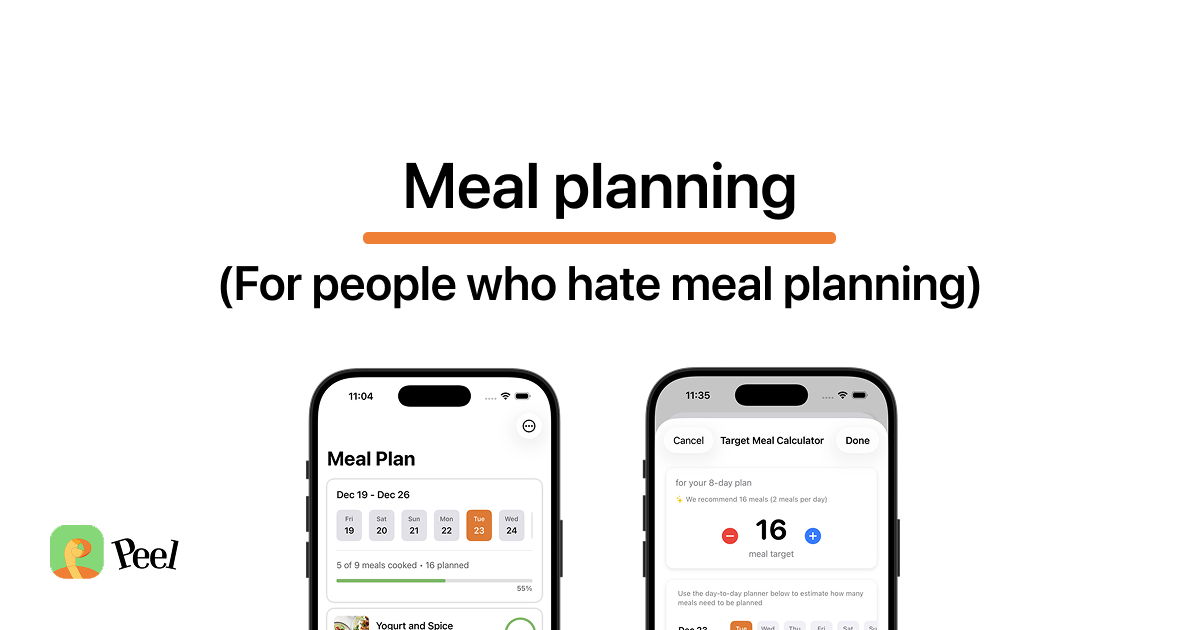
If you've struggled with any kind of meal planning before, this post about meal planning for people who hate meal planning might also be worth reading, it covers similar territory from a different angle.
The ADHD and cooking connection
ADHD and cooking have a complicated relationship. Cooking requires holding multiple things in working memory at once (time the pasta, don't forget the sauce, is the oven hot yet?), switching between tasks, and tolerating the wait between starting and finishing.
None of that is ADHD-friendly by default. But the decision to cook (having something in mind, having the groceries) is something a system can help with. The planning part can be made easier even if the cooking itself is still hard sometimes.
The goal isn't to become someone who cooks elaborate meals seven nights a week. It's to reduce the chaos around food enough that you're eating reasonably well, wasting less, and spending less mental energy on "ugh, what are we having for dinner."
Tools that help
A few things worth having:
A single place for recipes. Not a folder of screenshots, not a TikTok saved folder, not bookmarks in three different browsers. One place. Apps like Peel are built around this: save recipes from anywhere (TikTok, Instagram, websites), and your meal pool lives in the same place so planning is a matter of tapping "add to this week" rather than hunting for a link. If you want to weigh a few options side by side, our roundup of the best free meal planning apps walks through what actually matters when you're picking one.
A shared or synced grocery list. If you live with someone else, a list that syncs in real time means neither of you has to remember to text the other what to grab.
Low stakes. The biggest tool is psychological: a system that doesn't punish you when it partially breaks down. If missing a day or changing the plan means you've "failed," you'll stop using it. If it just means tomorrow is slightly different, you'll keep going.
Frequently asked questions
Is meal planning harder with ADHD?
What's the easiest way to start meal planning with ADHD?
How do I stop forgetting to cook the meals I planned?
How many meals should I plan per week if I have ADHD?
Last updated: August 2026